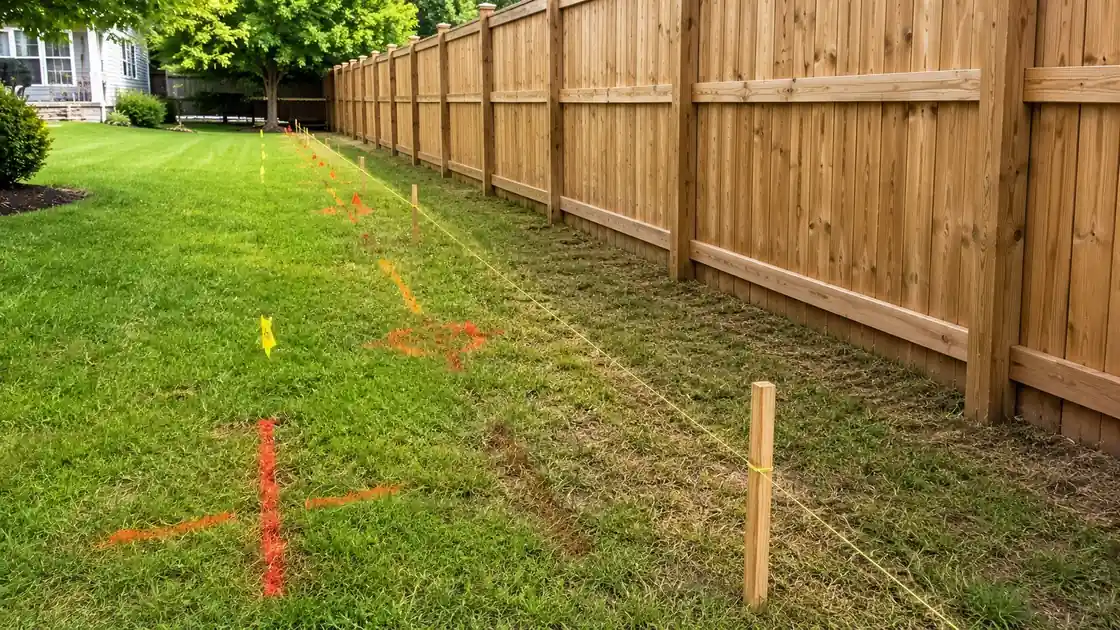
A little preparation before installation day keeps your fence project fast, clean, and free of surprises. Most of the work is simple, but a few steps matter a lot, especially around utilities and property lines. This guide gives you the full checklist we hand every Alabama Fence Company customer between signing and install day, whether you choose wood or vinyl.
Call 811 Before Any Digging
Calling 811 is non-negotiable before any post holes are dug, because the free one-call service protects everyone involved. Utility companies mark electric, gas, water, sewer, and telecom lines with color-coded paint or flags. Place the call at least two full working days before digging starts, and confirm the marks are current when the crew arrives.
The 811 system covers buried utility lines, but the paint marks only show approximate locations. Hand digging is still required near marked lines, so tell your installer about anything you know is underground. A missed line can cost thousands in repairs, and a free phone call eliminates nearly all of that risk.
Confirm Your Property Lines
The most common source of post-install problems is a fence that lands a few inches onto a neighbor's property. Pull out your property survey or plat if you have one, and look for survey pins at the corners of your lot. If you cannot find pins or any documentation, consider ordering a boundary survey before the install begins.
Most homeowners set their fence two to six inches inside the property line to leave a maintenance buffer and avoid disputes. An existing fence, tree line, or long-maintained landscape does not always mark the legal boundary. When neighbors share a line, a brief conversation prevents surprises and keeps relationships intact.
Check Local Rules, Permits, and HOA Requirements
Cities, counties, and homeowners associations often have rules about fence height, materials, and setbacks. Six feet in the backyard and four feet in the front yard are common maximums across Alabama towns, but restrictions vary by municipality. Verify the requirements that apply to your address before you finalize the design.
Utility, drainage, and access easements may cross part of your yard, and a fence in an easement can create problems later. Many towns require a permit for fence installation, and some HOAs mandate specific materials, colors, or styles. We handle permit coordination for our customers, but knowing the rules early keeps the schedule on track.
Mark Private Utilities on Your Side of the Meter
The 811 system only covers lines from the utility main to your meter, so everything on your side is your responsibility to locate. Sprinkler system lines and heads, landscape lighting wire, and invisible pet fence wire all sit outside the one-call scope. Private gas lines to a grill or outbuilding and septic system components are also yours to find.
If you know where these lines run, flag them with spray paint or stakes before install day. Sprinkler lines are the most commonly hit utility because homeowners forget they exist underground. Mark what you can, and tell the crew about anything you are unsure of before they break ground.
Clear the Fence Line
Your installer needs roughly three feet of clear space on each side of the fence line for people and tools to work. Move planters, garden tools, dog houses, patio furniture, and trampolines out of the path. Remove any debris, rocks, or old fencing materials that could slow the crew down.
Trim tree branches hanging lower than seven feet over the fence line, and cut back shrubs, vines, or tall grass directly on the line. Do not remove mature trees or established landscaping until the fence layout has been confirmed, because a small shift can change what stays. Flag anything sentimental with bright ribbon so the crew knows to protect it.
Plan Gate Locations
Think through how you actually use the yard before installation day arrives. Where does the lawnmower come out of the garage, and where do the trash cans go on pickup day? Where do kids, pets, and daily walking paths need access? Tell your estimator during the walk-through so gates land where they help most.
Typical residential fences have one or two gates, and larger lots often need three or more. Additional gates add cost, but they are much cheaper to include up front than to retrofit later. If you think you might want a wider opening for lawn equipment, discuss it before materials arrive.
Make Sure the Crew Has Access
Fence crews need truck access and a clear path to move materials and equipment to the fence line. Confirm that a pickup with a small trailer can get within about fifty feet of the work area. If there is a gate into your yard, make sure it will be unlocked and accessible on install day.
Walk the access route and remove obstacles such as low-hanging branches, narrow passages, or parked vehicles blocking the driveway. Let the crew know if there is an existing fence or old materials that need removal ahead of time. Clear access keeps the project moving and protects your belongings from accidental damage.
Secure Pets and Plan for Noise
Fence installation involves post drivers, nail guns, and other noisy equipment that can stress pets and create safety hazards. A dog loose on a job site is dangerous for both the crew and the animal. Plan for pets to stay inside or in a secure area away from the work zone on installation day.
Expect the work to be loud and the yard to be busy while crews are on site. Most residential fence projects complete in one to three days depending on length and material. Knowing the timeline ahead of time helps you plan schedules for kids, pets, and daily routines.
Talk to Your Neighbors
You are not legally required to notify neighbors before installing a fence on your own property, but it is good practice. If the fence will sit on or near a shared boundary line, a quick heads-up prevents surprises and keeps relationships intact. Let them know the planned timing, fence style, and whether crews may need temporary access near the line.
Neighbors may also know something you do not, such as the location of a shared drain line or an easement crossing your yard. A brief conversation before work begins can save hours of confusion later. Most boundary disputes are avoidable with one friendly discussion up front.
Quick Prep Checklist
This checklist covers the essentials for every project, but two earlier guides help with the big decisions behind the prep work. If you are still choosing a material, our wood vs. vinyl fencing comparison breaks down cost, lifespan, and maintenance. For a full price breakdown by material and height, see how much a fence costs in Alabama.
- Call 811 at least two working days before digging starts
- Confirm your property line with a survey, plat, or pins
- Check town zoning, permit, and HOA requirements
- Mark sprinkler lines and private utilities on your side of the meter
- Clear three feet on each side of the planned fence line
- Trim branches, vines, and tall grass along the line
- Move furniture, planters, toys, and tools out of the way
- Plan gate locations for mowers, trash, pets, and daily paths
- Provide truck access within fifty feet of the work area
- Secure pets inside and plan for noise on install day
- Flag anything sentimental you do not want removed
- Unlock gates and clear the access route before the crew arrives
Frequently Asked Questions
Who calls 811 for a fence installation?
Either the homeowner or the fence contractor can place the 811 request, and it is completely free. Many installers handle it as part of their prep work, but confirming it happened before dig day is your responsibility. The marks stay valid for roughly 28 days.
How far in advance should I call 811?
Place the call at least two full working days before digging is scheduled in Alabama, and allow extra time around holidays. Utility companies dispatch locators to paint or flag buried lines during that window. A last-minute request delays the whole installation.
Do I need a permit to install a fence in Alabama?
Permit requirements vary by town and county, and many Alabama municipalities require one for fence installation. Check with your local building or zoning office before the project starts. Height limits of six feet in back and four feet in front are common, and HOAs may add their own rules.
Should I clear my whole yard before the fence crew arrives?
No, focus on the fence line and the access path crews will use to bring materials. Clear about three feet on each side of where the fence runs, and remove obstacles along the route. Established trees and large shrubs can usually stay unless they sit directly on the line.